Bergey’s Truck Centers Acquires Cumberland Truck
Bergey’s Truck Centers Acquires Cumberland Truck



Nearly two-thirds of heavy-duty fleet maintenance shops are understaffed due to the ongoing diesel tech shortage.
For fleet managers that maintain their own trucks, fewer hands on the wrenches quickly translates to longer wait times, deferred preventive maintenance, and immobilizing vehicle downtime that threatens the bottom line.
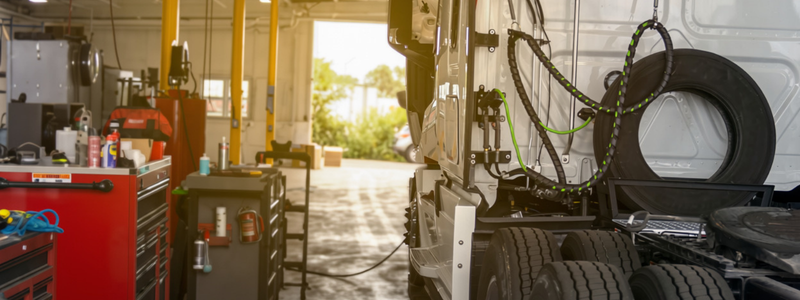
We feel this pain too. That’s why we’ve talked with our service managers and created a practical survival blueprint for fleet operations looking to keep their trucks running smoothly during a tech shortage. By exploring high-yield maintenance strategies, remote diagnostic tools, external mobile maintenance partnerships, and intentional shop floor culture shifts, you will learn how to optimize your current team’s efficiency, add additional assets and protect your fleet from extended operational downtime.
Preventive maintenance is always important, but when your shop is lean, this seemingly simple task becomes a key maintenance strategy. When your trucks are properly maintained, they have less chance of issues down the road, causing longer downtime and tying up precious tech time and can save money in the long run.
Today’s trucks are basically massive computers on wheels. Everything they do is captured and recorded. Use this valuable information to your advantage.

Whether you are a single shop with a few techs or a multi-location operation with many techs, giving them a simple tool they can use for internal tech support and open discussions is always helpful. They can learn from each other and teach each other, saving on productivity time trying to figure out situations that may be new to one tech but already solved by another. Simple instant messaging tools and apps work great, or your organization may have other ways to open communications for the tech team.
While you may try to manage all maintenance internally, there are always needs outside the norm. One maintenance strategy that helps with a tech shortage is to have a reliable partner for the jobs that are beyond your capacity.
When shops are short-staffed, burnout accelerates. Replacing a skilled diesel mechanic can cost nearly twice their annual salary. But it’s important to realize that true retention isn’t just about the paycheck, it’s about making your team feel seen, heard, and respected.

We use essential cookies and similar technologies to operate, secure, and provide core website features. These technologies remain active because they are necessary for the website to function. With your permission, we also use optional technologies to analyze website traffic, personalize content, and support advertising.
Select Accept All to allow optional technologies, Reject All to use only those necessary for website functionality, or Customize to manage your preferences.
We use cookies to help you navigate efficiently and perform certain functions. You will find detailed information about all cookies under each consent category below.
Necessary cookies are required to enable the basic features of this site, such as providing secure log-in or adjusting your consent preferences. These cookies do not store any personally identifiable data.
Functional cookies help perform certain functionalities like sharing the content of the website on social media platforms, collecting feedback, and other third-party features.
Analytical cookies are used to understand how visitors interact with the website. These cookies help provide information on metrics such as the number of visitors, bounce rate, traffic source, etc.
Advertisement cookies are used to provide visitors with customized advertisements based on the pages you visited previously and to analyze the effectiveness of the ad campaigns.
