Bergey’s Truck Centers Acquires Cumberland Truck
Bergey’s Truck Centers Acquires Cumberland Truck



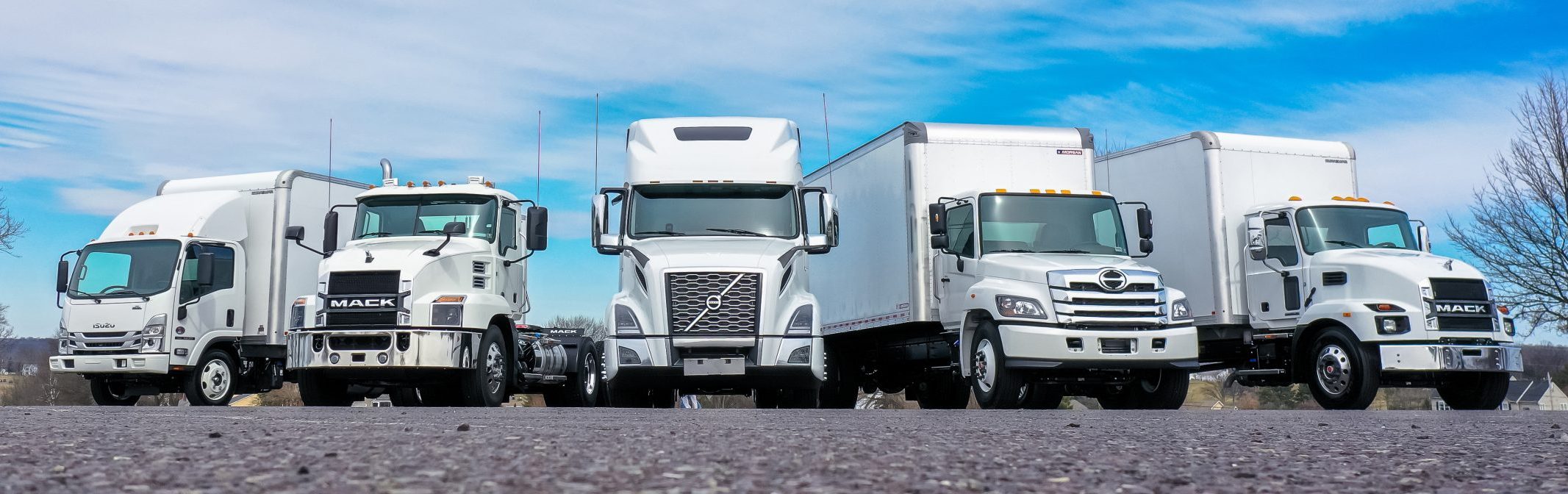
There’s no universal right answer. The best approach depends on your business model, growth trajectory, maintenance capabilities, and how much value you place on predictability versus flexibility. Some fleets are 100% owned, others are 100% leased, and many successful operations use a mix of both strategies depending on the vocation and vehicle type. Bergey’s has the unique position of being an authorized dealership for Mack, Volvo, Autocar, Hino and Isuzu. This provides our leasing team with access to direct ordering as well as all our OEM-trained technicians for top maintenance and service. Our team can work with you to understand your needs and come up with the best solution for your fleet. We have gathered the pros and cons of each approach – ownership vs leasing – and put all into a comprehensive breakdown to help you make the most informed decision for your next commercial vehicle acquisition.
Purchasing a commercial truck or trailer outright — or financing it through a traditional loan — remains a solid strategy for businesses with the shop resources, capital, and long-term hauling needs to make ownership worthwhile.
Ownership builds equity in a physical asset. Unlike a lease payment, loan payments build toward full ownership of a depreciable asset that holds real residual value. Owned trucks can be sold, traded in, or leveraged, giving your business financial flexibility down the road.
You control every aspect of the vehicle. From maintenance schedules to modifications and upfitting, ownership gives you complete control over how the unit is operated, configured, and cared for. If your business requires highly customized spec work — specialized bodies, non-standard equipment configurations, or unique vocational builds — ownership often makes more sense than trying to fit those specs into a lease agreement.
On-site maintenance shops become a competitive advantage. If your company already employs skilled diesel technicians and operates a fleet maintenance facility, you can leverage that investment more fully with owned assets. You control the parts sourcing, labor rates, and prioritization of your own units rather than depending on a third-party maintenance schedule.
Certain vocations favor ownership. Full-service lease companies typically don’t lease dump trucks, specialty vocational units, or highly customized equipment. If your operation runs refuse trucks, aggregate haulers, or other purpose-built configurations, purchasing is often your primary option. (Note: Bergey’s does offer leasing for units with custom bodies depending on the application — talk to our team about your specific vocation before assuming leasing isn’t an option.)
Potential tax advantages. Owned commercial vehicles may qualify for Section 179 expensing, bonus depreciation, and other deductions under current tax law. These benefits can meaningfully reduce your net acquisition cost. Consult with a tax professional to understand what applies to your situation.
Lower insurance costs in some cases. Depending on your insurer and fleet profile, owned vehicles can carry lower insurance premiums than leased vehicles, where lenders often require higher coverage minimums.
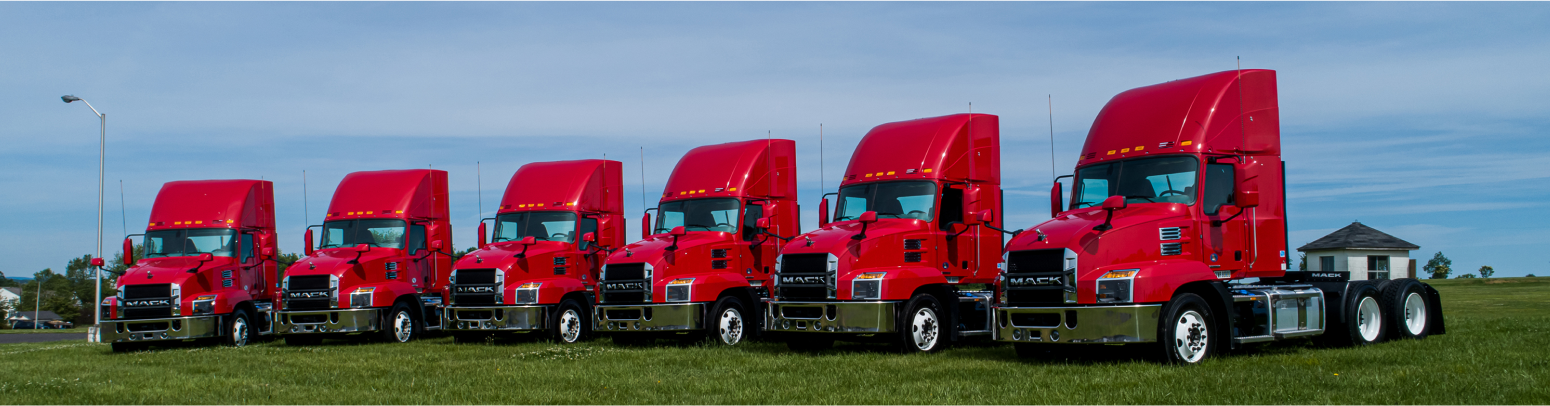
Full-service commercial truck leasing has grown in popularity for good reason — especially in an era of rising interest rates, tightening driver pools, and increasing pressure to keep trucks on the road. For many fleets, leasing removes operational complexity and converts unpredictable costs into a manageable monthly line item.
Guaranteed uptime is the top benefit for most fleets. Under a full-service lease, the leasing company is contractually responsible for keeping your trucks running. That means scheduled maintenance, unexpected repairs, and — critically — a substitute vehicle when your unit is down. For businesses where every delivery day matters, this protection has enormous operational value.
Predictable, all-in costs make budgeting far easier. Lease agreements combine a fixed monthly fee with mileage-based charges, which allows finance teams to forecast fleet expenses with much greater accuracy than ownership models, where major repair costs can be unpredictable and lumpy.
No down payment preserves working capital. Full-service leases typically require little to no money down, freeing up capital that would otherwise be tied up in depreciating assets. That liquidity can be deployed in drivers, technology, expansion, or other areas that directly grow your business.
Lease payments are 100% deductible as a business expense. Because you don’t own the asset, lease payments are treated as an operating expense and are fully deductible — often more tax-advantageous on a cash flow basis than depreciation schedules under an ownership model.
The leasing company absorbs residual value and asset risk. Truck values fluctuate with fuel prices, freight demand, and spec changes. With a lease, your leasing partner bears the residual risk when the vehicle reaches the end of its useful life. You’re never stuck holding an aging unit in a down used-truck market.
Access to newer equipment and technology on a regular cycle. Leasing makes it easier to rotate into newer trucks with more efficient engines, improved safety systems, and updated driver comfort features. In competitive freight markets, running newer equipment helps with driver retention and fuel economy.
Your team focuses on running your business — not a fleet. When maintenance, repairs, paperwork, and compliance are handled by the leasing company, your staff can focus on operations rather than fleet administration. This is especially valuable for growing businesses that don’t yet have the scale to justify a full in-house fleet management operation.
Do you have in-house maintenance capacity? If you do, ownership may let you get more value from those resources. If you rely on outside maintenance, leasing shifts the maintenance burden to a partner with that core competency.
How important is capital efficiency to your growth plans? Fast-growing fleets often find that leasing frees up capital for expansion in ways that ownership doesn’t. Established, stable fleets with strong cash reserves may be better positioned to own their assets outright.
How specialized is your equipment? Highly vocational or customized units, and equipment that requires frequent modifications tend to favor ownership. Typical over-the-road or regional delivery spec’d fleet are more suited to full-service lease structures.
How much do you value cost predictability? If budget fluctuation is a business risk, leasing’s predictable cost structure is a significant advantage. If your the financial structure can handle variable maintenance costs, than ownership can work in your favor long term.
Bergey’s Truck Centers has worked with fleet owners of all sizes across the Mid-Atlantic region since 1924. Our team offers both truck sales and full service leasing, and we can help you think through the right approach for your specific operation — whether that’s outright purchase, a lease agreement, contract maintenance, or a hybrid strategy across your fleet. For owned fleets looking for more maintenance predictability, our Fleet RPM program offers a structured preventive maintenance plan that brings some of the cost predictability of leasing to your owned assets.
Contact our full-service lease team to start the conversation.
We use essential cookies and similar technologies to operate, secure, and provide core website features. These technologies remain active because they are necessary for the website to function. With your permission, we also use optional technologies to analyze website traffic, personalize content, and support advertising.
Select Accept All to allow optional technologies, Reject All to use only those necessary for website functionality, or Customize to manage your preferences.
We use cookies to help you navigate efficiently and perform certain functions. You will find detailed information about all cookies under each consent category below.
Necessary cookies are required to enable the basic features of this site, such as providing secure log-in or adjusting your consent preferences. These cookies do not store any personally identifiable data.
Functional cookies help perform certain functionalities like sharing the content of the website on social media platforms, collecting feedback, and other third-party features.
Analytical cookies are used to understand how visitors interact with the website. These cookies help provide information on metrics such as the number of visitors, bounce rate, traffic source, etc.
Advertisement cookies are used to provide visitors with customized advertisements based on the pages you visited previously and to analyze the effectiveness of the ad campaigns.